Saying goodbye to your last grandparent
Last weekend was a memorial service for my grandmother, who had passed on January 6 at the age of 93. As I had mentioned earlier this month, she was not interested in celebrating her 94th birthday at the end of January; in fact, she had expressed for a long time how tired she was of living. My grandmother was still quite sharp mentally, posting political articles and memes on Facebook1 up until mid-November 2025. Physically, however, she had been ailing for years due to minor health issues she declined to resolve, as her hope was that these minor issues would become major ones. Instead, what she got were increasing levels of discomfort without any real change in her health. Around mid-November, she stopped posting online and made the choice to refuse food from her caregivers. Two days before Christmas, her health had declined to the point where she entered hospice care, then passed two weeks later.
The service held in her memory on Saturday 01-17 was different than many others I had attended. It was entirely held in a funeral home, as she expressly demanded there be no Catholic funeral Mass or any other formal religious ritual in her honor. My grandmother wanted to be cremated after death, so there was neither a coffin nor an open casket on display. A dove-gray object about the size of a breadbox rested on a raised platform, with her name, birth and death dates, and a couple commemorative phrases engraved upon it. Paying final respects to a breadbox-shaped object containing my grandmother's ashes lessened the finality of accepting her death. It was at times far too easy to view this box as just a box, and nothing more. At the same time, not having a physical reminder meant that all who attended the service could remember my grandmother in their own ways, and reflect upon what she meant to us over her 93 years of life. Not having a coffin-shaped reminder in the room turned out to be strangely freeing in its own way.
My uncle P. spoke for the family during the service. He is the youngest of five, and is currently the last sibling who is still working as the other four have retired. P. gave a great speech, interspersed with humor, family history, and some emotional moments when he could barely talk through tears. He spoke about the family's history with news media, my grandmother's voracious reading habits, her early computing days thanks to buying a Macintosh 512K in 1985 (along with an Apple LaserWriter that was $7000 at the time!), and a few things I wasn't aware of: her history of painting portraits, her middle name which only appeared upon Confirmation as she was not given one at birth, her work history, and her educational background (as I assumed she only went to high school, but she had some collegiate education as well). P.'s speech helped in many ways to flesh out more about the woman who was my longest-serving grandparent, though I have a feeling I will be learning more from my stepmother and other relatives as the months and years pass.
After the memorial, we gathered at a restaurant in Roselle that was very close to the locally famous Lynfred Winery. I spent a significant amount of time talking with cousins I hadn't seen in years, including my cousin S. and her future wife, E., whom I met for the first time. Having such a long gathering after the service helped everyone adjust their feelings with folks whom they care about. I brought my film camera with me, but only took a couple pictures at the service as the restaurant was way too dark to capture properly. However, the camera made a good conversation piece with relatives both old and young, which is partially why I brought it along in the first place (shh!).
L. and I were one of the last folks to leave the restaurant, as we had made plans to decompress in other parts of Chicago and adjoining suburbs. On Sunday 01-18, we visited my parents on our way back to STL, which turned out to be a smaller encapsulation of what happened at the restaurant. We talked at length about the burial process, since I will be making similar plans to inter my mother during 2026 (helpful tip: see how much it will cost to re-engrave the existing tombstone, versus buying a replacement). I also gave my father a homework assignment, which along with the decompression plans, will be explained in a future post.
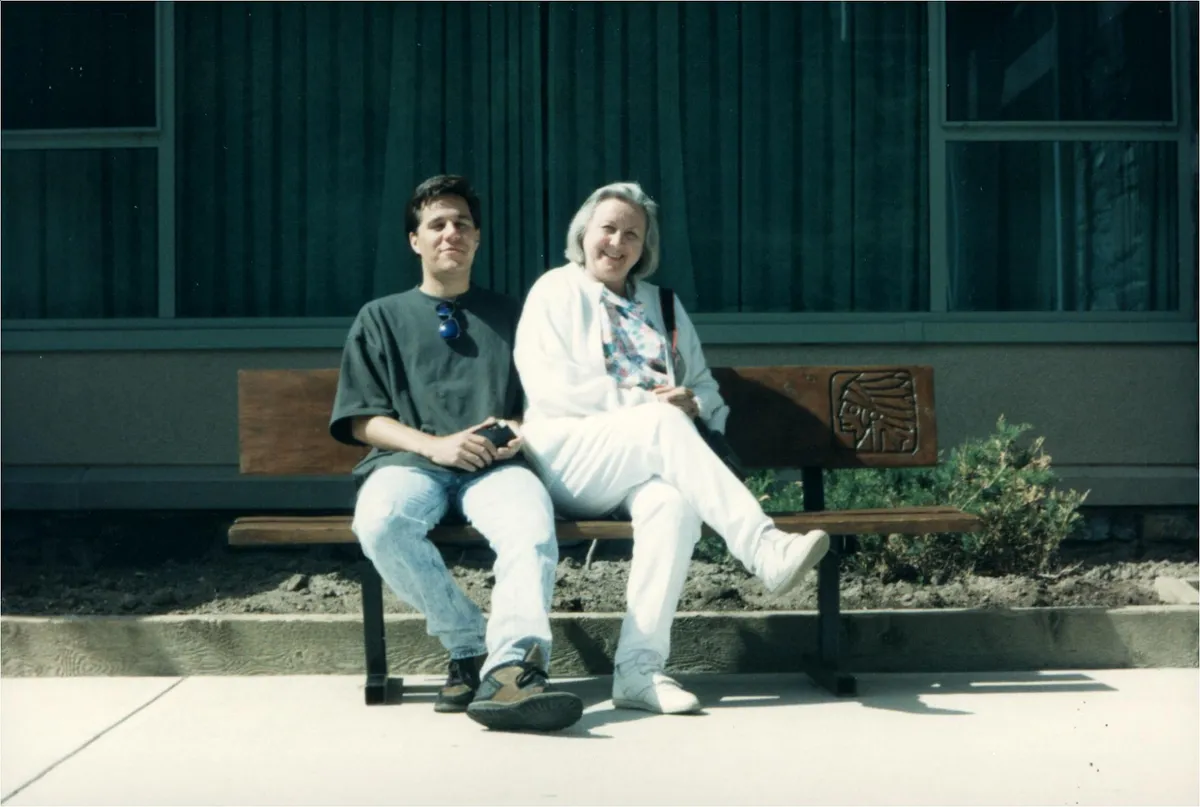
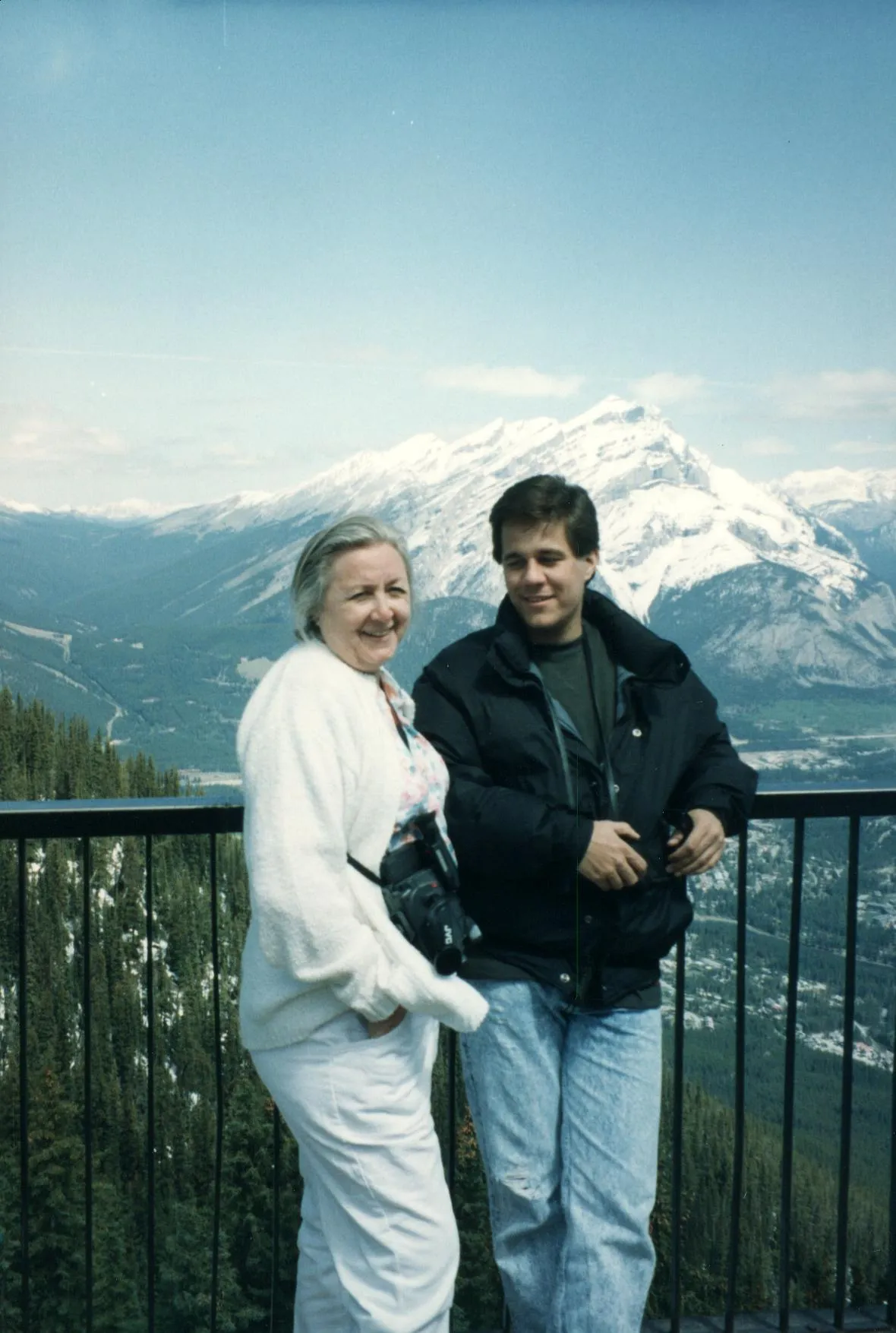
Besides talking about the business of burials with my family, I also had some time to reflect upon my grandmother’s role in my life. She was my last living grandparent, going back to 1981 when I was 9 and my father had remarried after four years of being divorced from my mother. Once the wedding finished up, one in which I was my father’s best man, I became part of a new family: one new stepmother, three new uncles, one new aunt, and two new grandparents2. The timing of my arrival into this new family nearly coincided with a departure from my old family, as I lost all contact with my mother’s father and his wife two years afterward. This was not my decision, but rather theirs and theirs alone. It’s why I don’t refer to my mother’s father and stepmother as “grandparents,” as they gave up that right. More on that below.
My grandmother was in my life for nearly 45 years. Some people don’t have their parents in their lives for that long, let alone grandparents or other elder relatives. I lost my mother in 2024, shortly after I turned 53, though to be truthful there were some years when our relationship was nearly as lost as was mine with her father and stepmother. To understand why, I’ll talk a bit about conditional vs. unconditional love, as my mother was subjected to the former by her father and later on her stepmother. Her father, M., was always disappointed in his daughter (and only child, I should point out), and by extension, with his first wife, V. By contrast, V. held nothing but love for her daughter, which is one of many reasons why her early death at 49 was so tragic for everyone. Well, nearly everyone: V.’s early death proved to be really convenient for M. He found solace with a neighbor, a married woman, which was commented upon by many older family members during V.’s own funeral3. This other woman, R., shared with M. the idea of conditional love for their family, as she had been practicing it upon her own children and first husband. Two rotten peas in a pod, I say. About 18 months after V. was buried, M. & R. were themselves married, and they doubled down on their conditional love with my mother. When I came along, I was also wrapped up in this “love” of theirs, which carried through the time when my parents divorced. While my father eventually remarried, my mother did no such thing. For a few years after the divorce, my mother went through what I now call a “lost” period in which her own behavior echoed that of her father and stepmother. Why wouldn’t it, right? That’s what she learned, after all. It was during this “lost” period that I lost contact with M. & R., as I apparently didn’t meet whatever conditions they had set for me. It’s likely I never would have been able to meet their arbitrary requirements, as that’s what conditional love is about.
I could go on further about my mother’s family, though I’ll stop for this post. My mother learned the hard way about conditional love, which she tried to make up for with me later on in life with mixed results. As for my new grandparents, these folks were far superior people to those on my mother’s side. These folks put no conditions on their love, whether for me, their own children, my siblings, my cousins from these same children, or their great-grandchildren. They supported our lives and our choices in life, even when they disagreed with them. Unconditional love doesn’t always mean unconditional agreement, as you can disagree with love in your heart even if your mind thinks otherwise. Both my grandparents would not shy from their opinions or advice, but in the end, they knew when to step back and let their children or grandchildren live their lives as best they could. They both understood that love wasn’t just words but needed to be shown over and over again, and in that way, they succeeded far beyond what I ever could have received from my mother’s side of the family. I have never had any doubts about the love my grandparents had for me, as that’s what unconditional love is about.
My grandmother was a complex woman, but after nearly 94 years of life, she earned that right. Whatever may be thought of her decision to bring her life to a close does not negate how she lived and loved during her time alive, both of which she did unconditionally. As time goes on, I know I will learn more about her life, as someone who was almost 94 contains multitudes which I can just begin to understand even after all of these years. I already miss her, even though I know she lives forever within me, as well as with everyone who was fortunate to know her.
I am lucky that my grandmother was, for all practical considerations, a Bernie bro. She was an outlier in her nursing home, a fact in which she gleefully reveled.↩
I had mentioned this in a footnote back in June 2025, but yes, for the pedants out there, these are my step-grandparents, but I don't split hairs on this topic. Any further "well, actually" comments about it can be shoved up your ugly ass. ↩
V. died nearly three years before I was born. She would have been my maternal grandmother, and based upon years of stories from numerous family members, I believe that she would have been ecstatic to be a grandmother. All the stories about M.’s behavior came from many of the same family members, including my mother when she was alive. Most of these folks believe that M. had been stepping out on his marriage with V. prior to her death, and that her funeral was the “right” time to stop acting in secret.↩